WAVES | Birth by Design

SECTION ONE – LAYING THE FOUNDATION • CHAPTER 02
CONTENTS
Understanding Labor
Labor is a natural, progressive process designed to guide your baby into the world. For both moms and partners, understanding the physiological changes taking place takes the mystery out of birth and helps replace anxiety with confidence. Your body isn't working against you during labor; every contraction has a clear purpose.
The Two Primary Mechanics of Labor
Throughout labor, the uterus works to accomplish two main goals:
- Effacement: The thinning and shortening of the cervix. Think of the cervix like a snug turtleneck sweater—before labor, it is thick and long. During labor, it thins out until it is completely drawn up. This is measured in a percentage.
- ex. "You are 50% effaced."
- Dilation: The opening of the cervix from 0 to 10 centimeters (cm) to allow baby to pass through. Often, dilation seems to be the "main player" that everyone focuses on. While it is important, it is not the end all be all of labor progression. Dilation is often slowed down by effacement, and it is possible to go from 0cm to holding a baby in a very short amount of time.
- ex. "You are 4cm dilated."
The 4 Stages of Labor
Labor is divided into four distinct stages. These stages are the "typical" layout of labor and what you may experience. Some mothers do not notice the earlier part of labor, some go straight into active labor and then immediately transition. These are the typical stages of labor that you will more than likely experience:
- Stage 1 – Early, Active, Transition | This is the longest and often "hardest" stage of labor. It consists of contractions that are consistently getting longer, stronger, closer together, and causing expansion. Transition is often the shortest phase, it is where the contractions "transition" from expansive (dilating/effacing) contractions and turn into pushing/expulsion contractions. It can be really intense. This is often where mothers doubt their ability (spoiler: they always do it).
- Stage 2 – Pushing | Contractions that are expelling the baby from the uterus. Often, when baby gets moved low enough in the birth canal, the body will take over and the mom will experience either the Ferguson Reflex or the Fetal Ejection Reflex.
- Stage 3 – Delivery of the Placenta | The placenta is the organ that was grown alongside you baby and kept them alive for the past nine months. This needs to be delivered as well. It typically detaches from the uterus after 20-60 minutes, and typically slides out. The placenta also tells the body to start producing milk because it is no longer feeding hormones throughout the body to sustain the pregnancy.
- Stage 4 – Immediate Postpartum (Golden Hour) | This is not a typical phase of labor where you have to work through it or actively participate, and technically, labor is over since the placenta is born. The first hour or two following delivery is for recovery, skin to skin bonding, and encouraging baby to latch within that first hour. In the background, the uterus is contracting (these should feel like cramps, though they do get worse with each baby). These contractions are closing off the blood vessels and ensuring that bleeding stays at a minimum. You can take Tylenol or Motrin (or both) for these cramps, you may also take AfterEase.
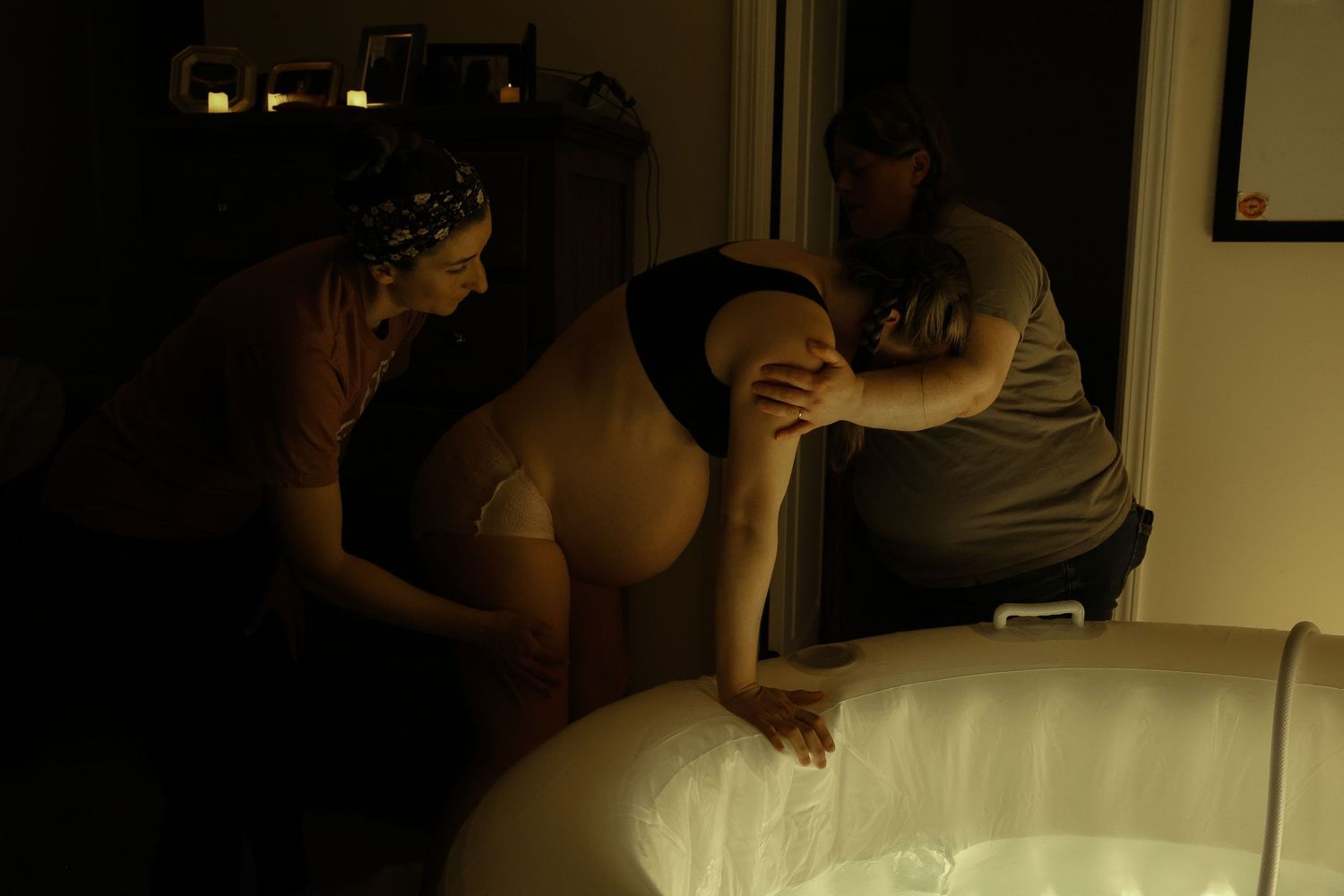
What does a contraction "look" like?
There are a few different types of contractions that you should learn about and be aware of. We will talk about the three most common, and what you should do when/if you encounter them.
Braxton hicks contractions
Braxton hicks contractions are simply just the tightening and releasing of the uterine muscles (like all contractions), however, they only occur in sections of your uterus and they are not painful, they also do not cause any cervical change. Braxton hicks contractions feel different to everyone, but I always knew I was getting one when my belly got hard, it didn't hurt, and it felt like a tight hug.
Lots of things can cause the uterus to contract in this way. A lot of times the uterus is often having practice contractions from 10 weeks onwards, but they do not become more noticeable until your belly is bigger and stronger. By the time you are feeling these, you may be 20 weeks pregnant, or with subsequent babies, it may be sooner. These should not be alarming as they are just practice. If they become painful or develop a pattern, alert your medical professional (and your doula, if you have one, she would like to know, too).
Some common causes of braxton hicks are being dehydrated, your uterus simply practicing for labor (lifting weights, hehe), sex, nipple stimulation, or orgasms (Oxytocin is what causes contractions, real or practice), baby moving around in your womb, sitting up, moving too fast... the list goes on and on.
The biggest take away is that it should not hurt, should not gain a pattern, and should not be predictable.
That brings us to our next type of contraction...
Prodromal labor
In my professional opinion, I think prodromal labor sucks. Prodromal labor is the evil stepsister to Braxton Hicks contractions, and she makes herself known.
These contractions look, feel, and behave like true labor contractions. They are often painful, regular, and can be intense. Prodromal labor contractions are more likely to cause cervical change, but often they are spaced far enough apart and because they do not grow in intensity, it often is not much cervical change. Remember, cervical change can be dilation (opening) OR effacement (thinning).
Some women have an "irritable uterus" which means that they are more prone to contractions and little things set it off for no real reason. This is not the same as pre-term labor, it just means that you are experiencing more prodromal/false labor contractions than normal people. (I was one of those...).
To tell the difference between prodromal labor and true labor, you should try a few things. Start by drinking a bottle or two of water, with one electrolyte packet if you can. Next, change what you're doing. If you're walking, stop. Cleaning, stop. Resting, get up. After that, head to the shower or the bath, pour some epsom salt in there if safe to do so, and see if these contractions change at all. Slow, space out, closer together, SOME kind of change. If it can be affected by one of these things, more than likely it is prodromal labor.
If these things do not change the contractions, but instead they continue to grow longer, stronger, and closer together over time, and you are due soon, you may be experiencing early labor.
Remember, prodromal labor should be the same throughout. True labor contractions grow, change, and intensify significantly.
True labor contractions
True labor contractions, rather active labor contractions, are hard to miss. These contractions are longer, stronger, and closer together as time passes. These contractions cause cervical change, they bring your baby down, and cause you to focus and work through contractions.
I want to emphasize that early labor contractions are very, very bearable. When paying attention to contractions in labor, do not look so much for "Oh, can I talk through them? Can I laugh? Can I move?" look for how you're doing in the breaks. While we know that even during active, established labor some women are perfectly fine, MOST women are needing those breaks to desperately recover from that contraction. (This is when I suggest that families head to the birth location).
I have attended enough births where when I get there after being told "these contractions are rough, I can't talk through them..." most of the time, mom is choosing not to talk through them, and then immediately is back to joking and talking through contractions sometimes.
Through my experience and eyes, I know that we are in an established labor not based off of length and frequency (though, that is a tool I use), but rather how mom is sounding, how long she takes to recover, and what the vibe feels like. You obviously won't know what the "vibe" is, but it's when things feel serious, when there is no longer "haha"s and "hehe"s through the breaks. If you have ever been to the gym or watched someone work out, those first few sets are fun, you're excited, often it feels easy and you recover quickly. When you rep until failure, those last few reps have you literally hanging on and recovering in the break and "Oh, no... not already..." when your break is up. THAT is the active labor that you want to be looking for, that is most likely when changing your scenery and support is not going to heavily affect your contractions.
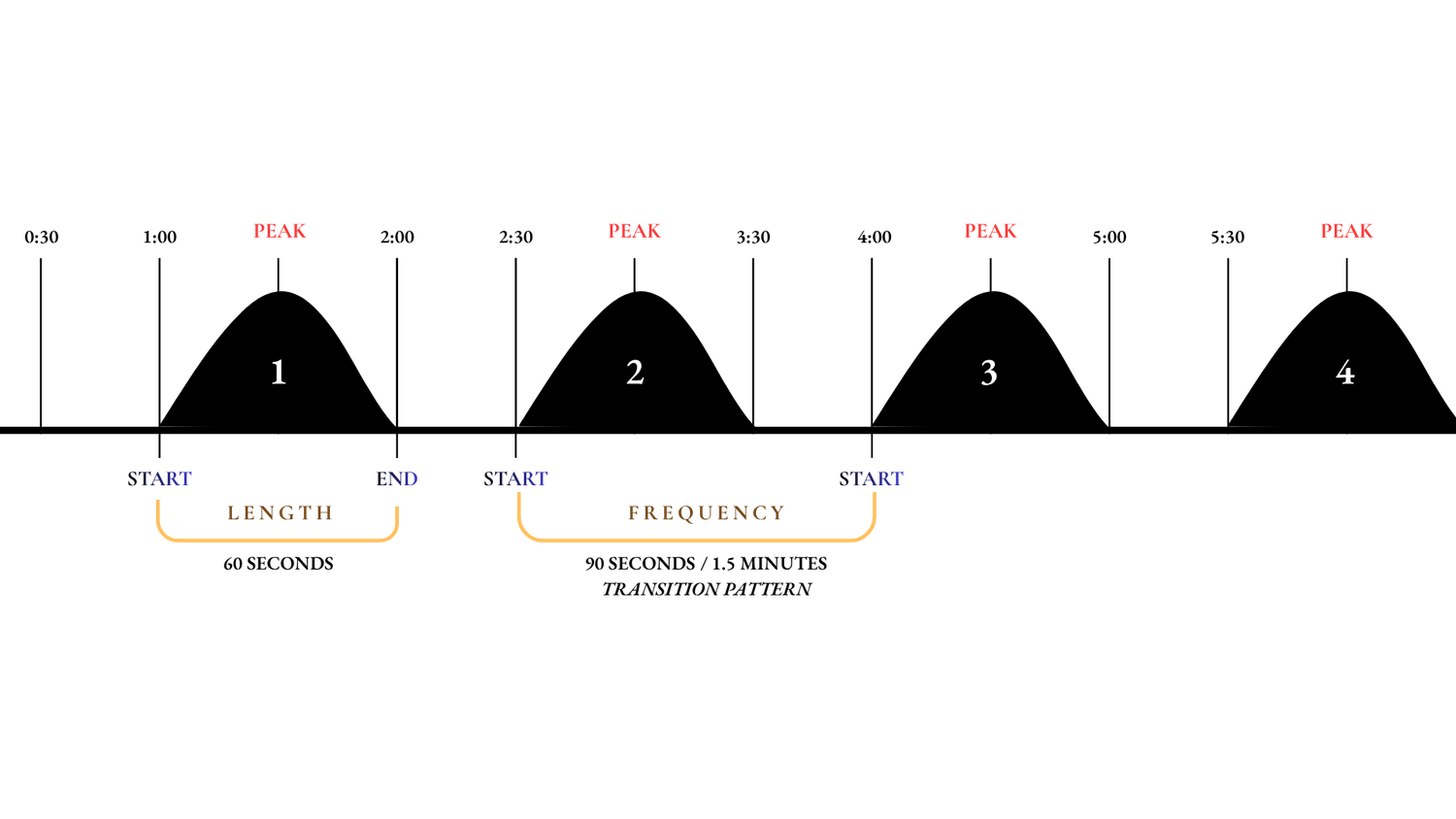
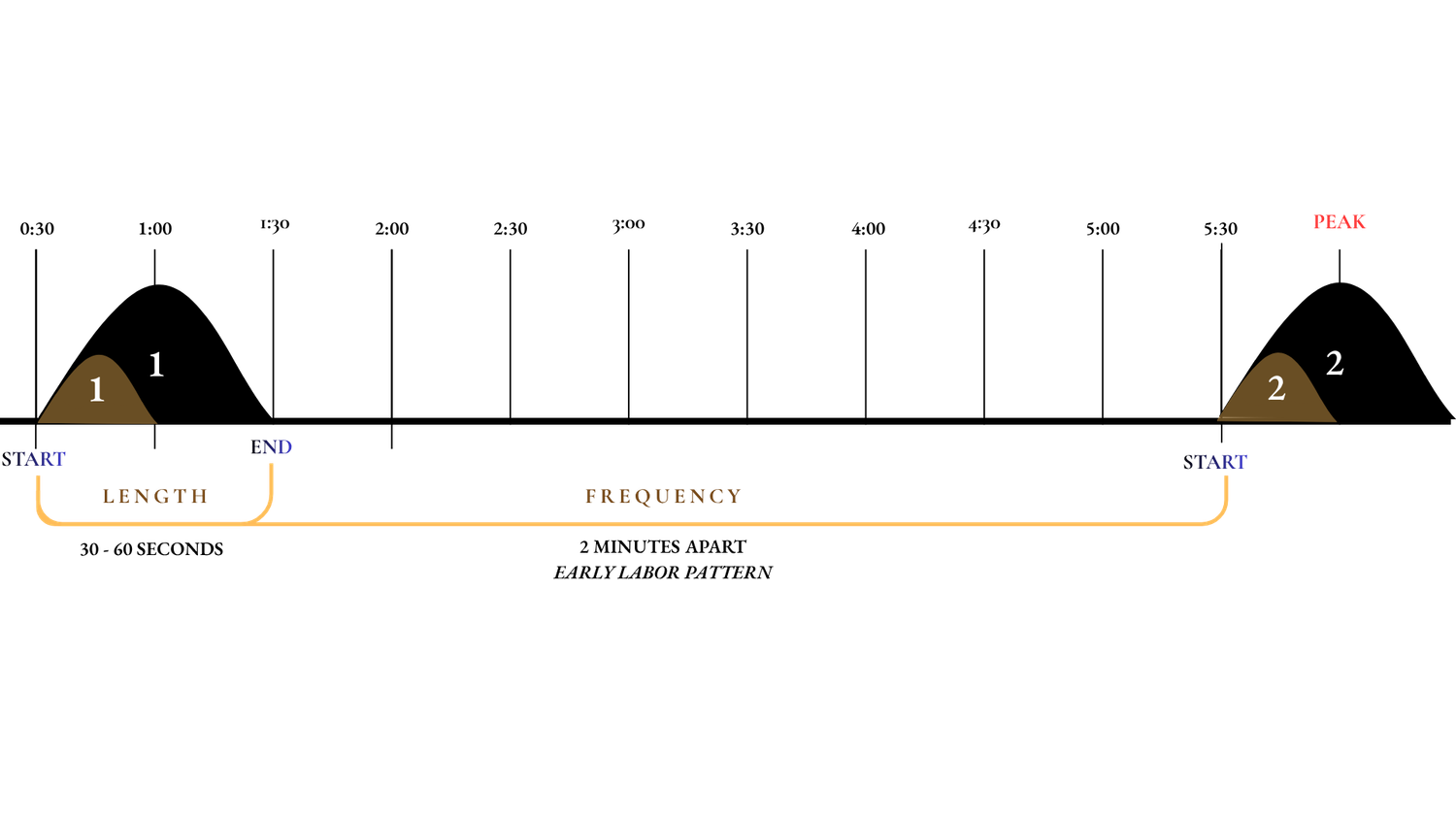
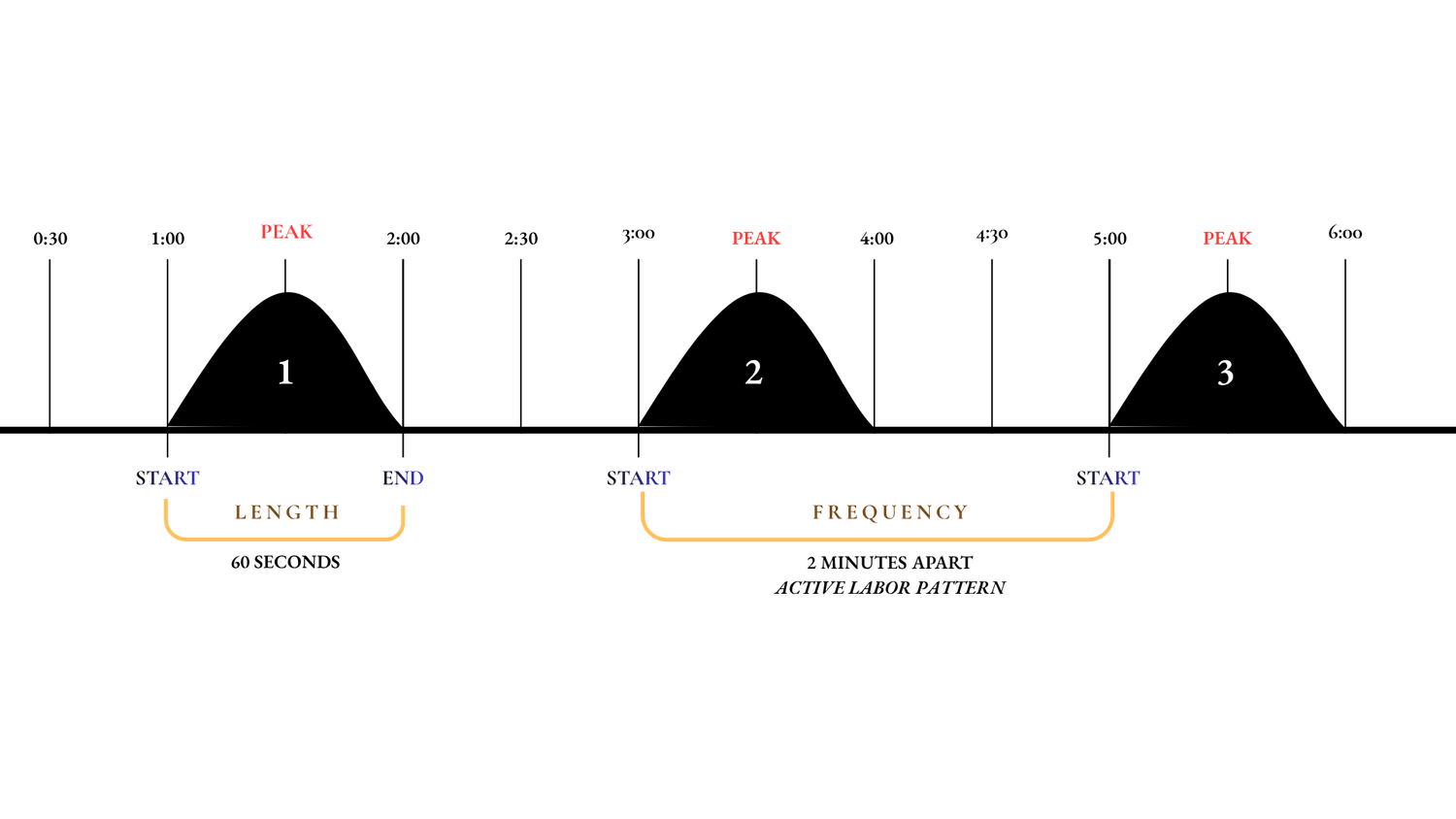
Below are some diagrams to help you visualize the changes in contraction pattern, and to understand how to correctly time them, should you decide to during labor (or at any point during pregnancy and you experience them).
Early Labor Contractions
Active Labor Contractions
Transition Contractions
NEXT CHAPTER – 03
fear–tension–Pain Cycle
This chapter covers the different phases and stages that you will experience during the birth of your child. Labor isn't just contractions all the time, nor are they the same the entire time through.
© 2026 Amie Bogart | Dove & Lioness Doula Services. All Rights Reserved
This educational course is written using established educational principles, reliable information sources, personal experiences and observations during births, common knowledge, and extensive self research. Birth is deeply nuanced and complex. Your individual birth experience may not be similar to the information, examples, or stories shared throughout this course, as every person's journey is unique. Everyone experiences labor differently, and what one person encounters may be entirely different from another's experience.